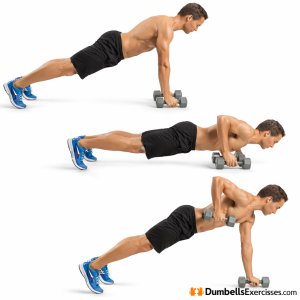
What Is the Push-Up to Row?
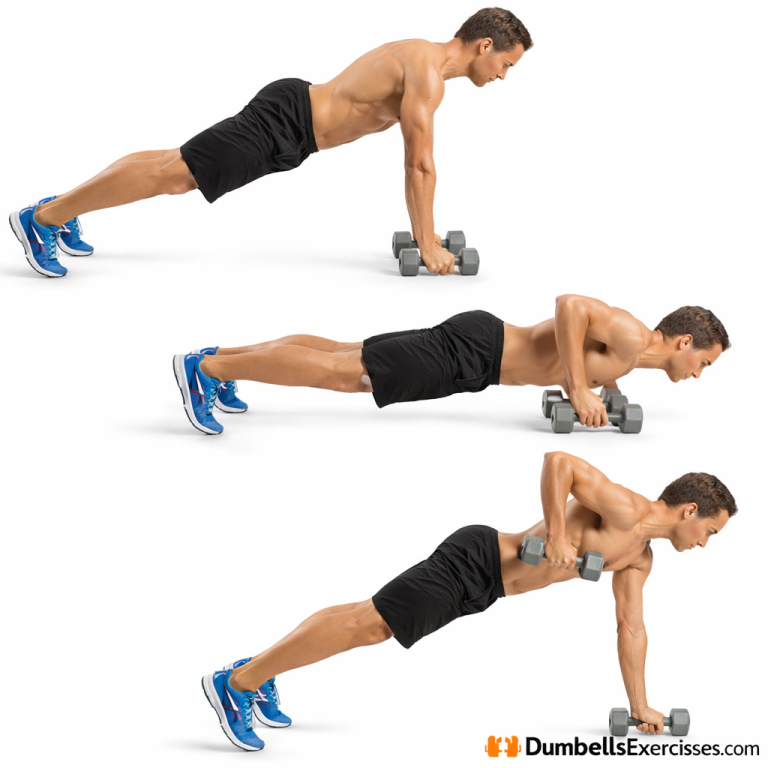
The push-up to row, commonly called the renegade row, is a compound dumbbell exercise that combines a push-up with a single-arm row. This movement targets your chest, back, shoulders, arms, and core in one fluid motion, making it one of the most efficient full-body dumbbell exercises you can perform.
By requiring you to stabilize your body while rowing, this exercise challenges your anti-rotational core strength while building upper body pushing and pulling power.
Muscles Worked
The push-up to row targets multiple muscle groups:
Primary Muscles:
- Chest (pectoralis major)
- Lats (latissimus dorsi)
- Core (rectus abdominis, obliques, transverse abdominis)
Secondary Muscles:
- Shoulders (anterior and posterior deltoids)
- Triceps
- Biceps
- Rhomboids
- Trapezius
- Glutes
- Hip flexors
How to Perform the Push-Up to Row
Starting Position:
- Place two hex dumbbells on the floor, shoulder-width apart
- Grip the dumbbells and assume a high plank position
- Keep your feet slightly wider than hip-width for stability
- Engage your core and maintain a straight line from head to heels
The Movement:
- Lower your chest toward the floor, performing a controlled push-up
- Press back up to the starting plank position
- Shift your weight onto your left hand
- Row the right dumbbell toward your hip, keeping your elbow close to your body
- Lower the dumbbell back to the floor with control
- Repeat the push-up, then row with the left arm
- Continue alternating sides
Common Mistakes to Avoid
Hip Rotation: The most common error is allowing your hips to twist during the row. Keep your hips square to the floor throughout the movement.
Sagging Lower Back: Maintain a neutral spine by bracing your core. If your hips drop, reduce the weight or modify the exercise.
Rushing the Movement: Perform each phase with control. A slow, deliberate tempo increases time under tension and reduces injury risk.
Using Round Dumbbells: Hex or square dumbbells provide stability. Round dumbbells can roll and cause wrist injuries.
Elbows Flaring During Row: Keep your elbow tucked at approximately 45 degrees during the rowing portion to protect your shoulder joint.
Benefits of the Push-Up to Row
Time Efficiency: Train pushing, pulling, and core stability in a single exercise, cutting your workout time significantly.
Core Strength: The anti-rotational demand builds functional core stability that transfers to sports and daily activities.
Improved Balance: Stabilizing on one arm while rowing develops proprioception and unilateral strength.
Muscle Symmetry: The alternating nature helps identify and correct strength imbalances between sides.
Metabolic Demand: Engaging multiple large muscle groups elevates heart rate and increases calorie burn.
Push-Up to Row Variations
Beginner Variations:
- Knee push-up to row
- Push-up to row from an elevated surface
- Plank row only (skip the push-up)
Advanced Variations:
- Push-up to row with feet elevated
- Push-up to double row (row both sides before the next push-up)
- Burpee to renegade row
- Push-up to row to rotation (add a side plank at the top)
Programming Recommendations
For Strength:
- 3-4 sets of 6-8 reps per side
- Use heavier dumbbells
- Rest 90-120 seconds between sets
For Muscle Building:
- 3-4 sets of 8-12 reps per side
- Moderate weight with controlled tempo
- Rest 60-90 seconds between sets
For Conditioning:
- 3 sets of 12-15 reps per side
- Lighter weight, faster pace
- Rest 30-45 seconds between sets
For Core Focus:
- Slow tempo (3 seconds down, 2 seconds up, 2-second row hold)
- 3 sets of 8-10 reps per side
- Emphasize anti-rotation throughout
Sample Workout Including Push-Up to Row
Full Body Dumbbell Circuit:
- Goblet Squat – 12 reps
- Push-Up to Row – 8 reps per side
- Romanian Deadlift – 10 reps
- Dumbbell Shoulder Press – 10 reps
- Farmer Carry – 40 steps
Complete 3-4 rounds with 60 seconds rest between rounds.
Who Should Do This Exercise?
The push-up to row is ideal for intermediate to advanced trainees who have mastered both the standard push-up and dumbbell row independently. It suits anyone looking to maximize training efficiency, build functional strength, or add variety to their dumbbell workouts.
Beginners should first develop adequate push-up strength and core stability before attempting this movement. Start with the regression variations listed above.
Equipment Needed
- Two hex dumbbells (matching weight)
- Exercise mat (optional, for wrist comfort)
- Flat, stable surface
Frequently Asked Questions
How heavy should my dumbbells be for push-up to row? Start with a weight you can comfortably row for 12-15 reps with good form. Most people use 15-35 lb dumbbells, depending on their strength level.
Can I do push-up to row every day? No. Allow 48-72 hours of recovery between sessions targeting the same muscle groups. Include this exercise 2-3 times per week maximum.
Is the push-up to row good for fat loss? Yes. The high metabolic demand from engaging multiple large muscle groups makes it effective for calorie burning and fat loss when combined with proper nutrition.
What if I can’t do a full push-up? Perform the movement from your knees or with hands elevated on a bench until you build sufficient strength for the full version.
Final Thoughts
The push-up to row is one of the most effective compound dumbbell exercises for building total-body strength and stability. By combining pushing, pulling, and core anti-rotation into one movement, you get maximum results in minimum time.
Focus on maintaining strict form, progress gradually with weight, and incorporate this exercise into your routine 2-3 times per week for best results.